
Before this podcast had a name, a format, or even a plan, Laura sat down with Tim for a conversation that never quite found its moment – until now. It was one of those chats that stayed with her – thoughtful, funny, and unexpectedly open. Somehow, the interview transcript ended up sitting quietly in the archives. It felt wrong to leave it there, so here are the highlights.
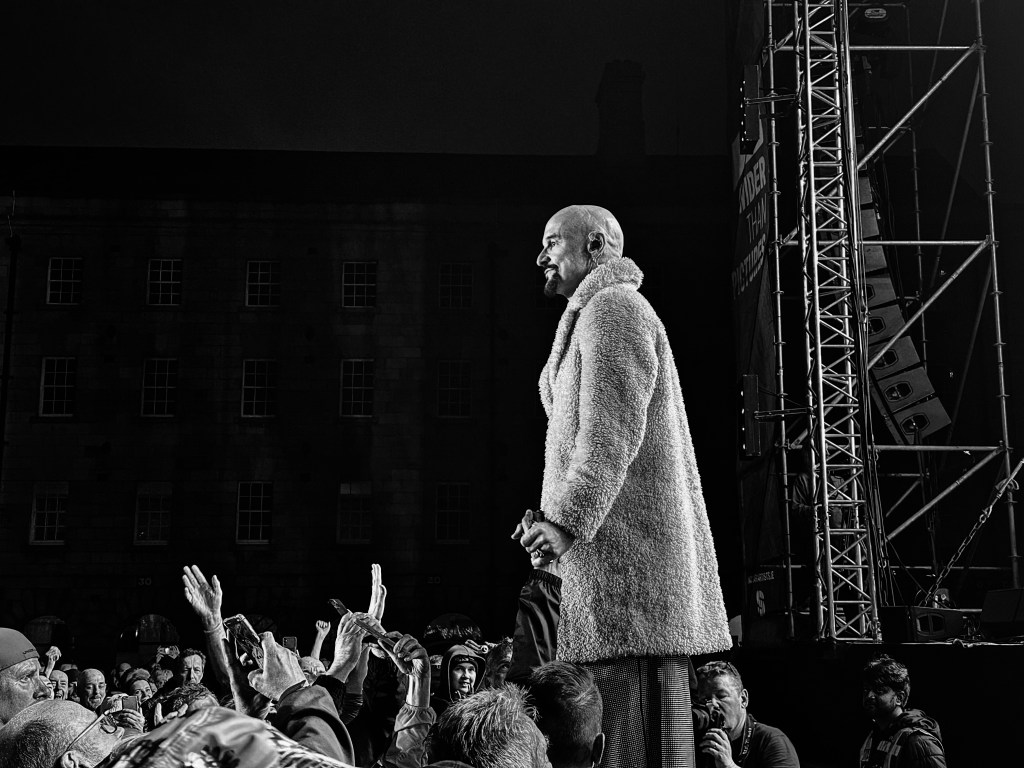
What’s your favourite Yummy track to play live? ‘Shadow of a Giant.’ Some songs are just so good live. It’s why we don’t play ‘Our World’ – it’s not really a live song, it doesn’t quite hit.
‘Stay’ seems to have been quite a staple in the set lately. I really like that one. Chris Martin wrote to us and said, “I love Yummy. Can you send me the stems? I want to rearrange ‘Stay’ for you.” So we’ve been playing his version. We added one verse back in – but basically, it’s his arrangement. And he’s right. It gives the audience more time to get used to it. The album version deliberately moves quickly, which works in that context – you want variations of tone, pace, and structure to tell a story. But live, when people haven’t heard it before, it starts with the vocal and then it’s over, and you’ve only sung the chorus about one and a half times. That’s quite hard for an audience to grasp. With his arrangement, by the third time we played it, the audience was going, “fuck, this is good”. It’s good – and quite cool that it’s changed. Very unexpected.
What kind of shows excite you most? The dangerous ones – where it feels unpredictable. Like the first time I saw Nick Cave, it was wild. That kind of “what the hell is happening?” energy.
Do you ever think about what could go wrong when you go into the crowd or onto the balcony? No. I trust the audience.
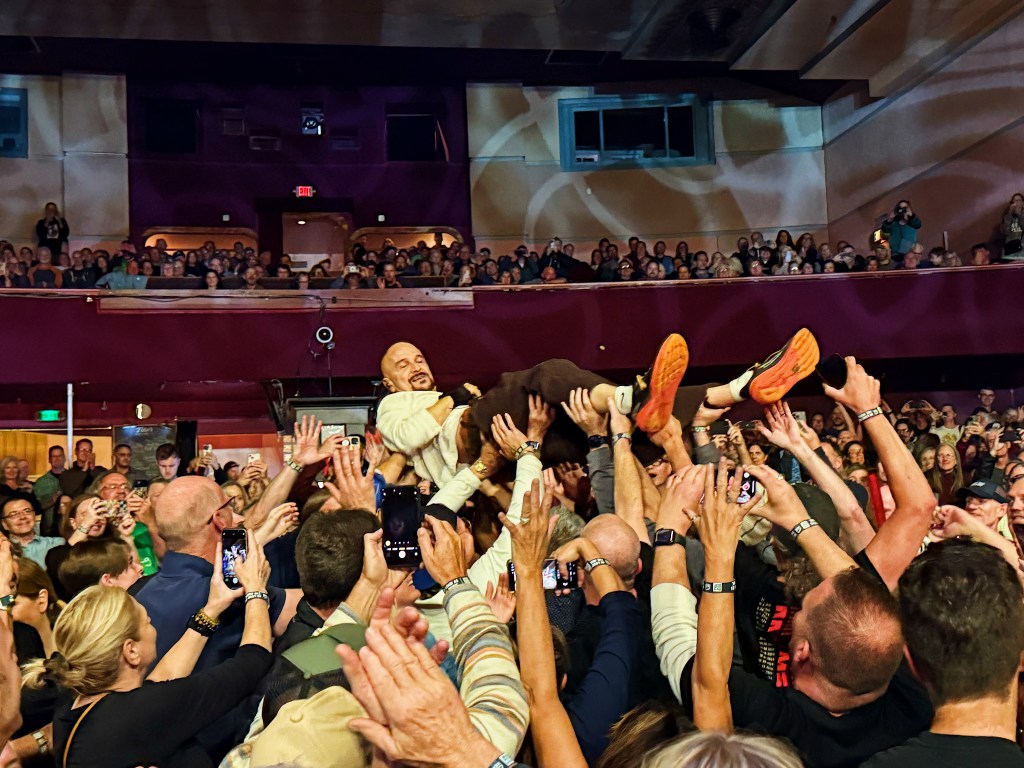
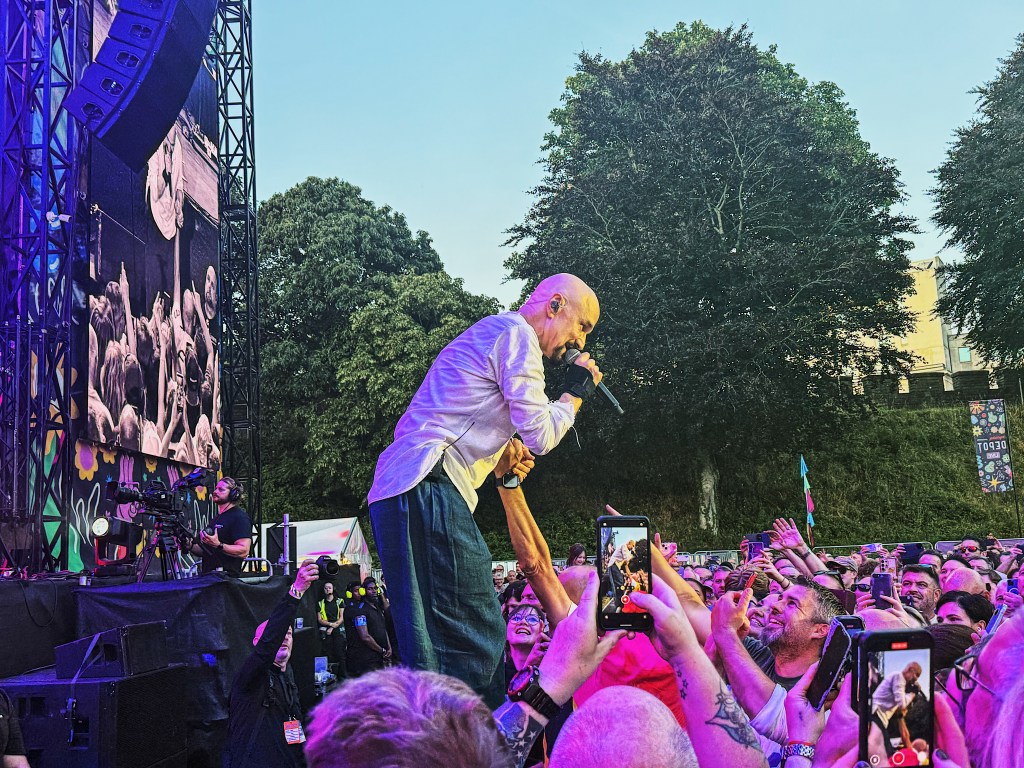
Can you judge a crowd before you do something like that? Not really – especially with crowdsurfing. Phones make it more dangerous, because you reach a point where there’s a gap and people are standing back filming you. You’re thinking, “are you going to drop me here?” Then someone rushes in to catch you. But it’s getting more and more dangerous, so it might not happen. The cameras might ruin it.
Why is that audience connection so important to you? You can have amazing moments with people. Sometimes you see so much in them. I remember one gig – maybe in New York – where there was a guy in a wheelchair who stood up, and I sang to him for a long time. Another time, I did a walkabout somewhere like Cardiff and went around the whole venue. At one point I was being followed by a pretty drunken mob, so I ducked into the disabled section. I sang to each person there, and the crowd backed off, like, “oh, okay – he’s having a moment.” I remember moving from person to person. Most of them could move, and then I got to the last person. He couldn’t move, but everything was in his eyes. Everything. And it was just beautiful.

Have you had many experiences with hostile audiences? On the Lollapalooza tour. We were playing to people who hated us. Two weeks into the tour, we were dressed up, and this guy at the front was screaming abuse at us. I just found myself offstage, singing into his face. We were on the big screens in the sheds in America. At the end of the song, he leaned in and said, “Will you give me a hug?” So I did. I gave him a hug, and I looked up and saw rows of people screaming abuse, and I just started walking. I went to each of them. Every gig after that, I went out for two songs to the most hostile people. No one hit me. I’d get there and they wouldn’t know what to do with me. Then they’d see that I was just there to sing to them, and they’d soften. It killed my fear of an audience in a way, and it put some trust in that which I think is still with me.
Is that what inspired the part in your book [When I Died For The First Time] where Seth [Brakes] does similar? Yeah, that was pretty much how it was with the core audience.
Talking of touring, do you think you’ll ever do another orchestra tour? Oh yeah, but probably not for a few years.
I wasn’t sure how well the show would translate to an outdoor setting, but it worked in Bedford and Lytham. We didn’t quite get the set right in Lytham, but Bedford was beautiful. At Latitude, I deliberately put a really tough set together – all the slow songs at the beginning – because it was lunchtime, and people loved it. Fifteen thousand people came, stood, listened to every word, and put their phones away. And it was like, “we can take this into bigger venues, and they can stand.” We thought we were limited to orchestral venues, with the biggest being the Royal Albert Hall.
The Acropolis show looked spectacular. I’m glad you filmed it. I think we captured it well. You never know with filming whether you’re going to catch that moment. And that was because the choir and orchestra were so into what we were doing. They bought into it and loved it – the risks too. I got them to come and dance with me, and to go out into the audience. They were just so lovely. Such a good group of people. It was so fun.
There’s definitely been a surge in bands putting on orchestral shows in recent years. What mattered most to you when bringing in an orchestra and choir? I think most bands, when they have an orchestra or choir, treat them as something supplementary at the back. But we wanted them to shine. The whole point was: if you’re going to be on stage with us, you’ve got to shine. So it was just such a joy.
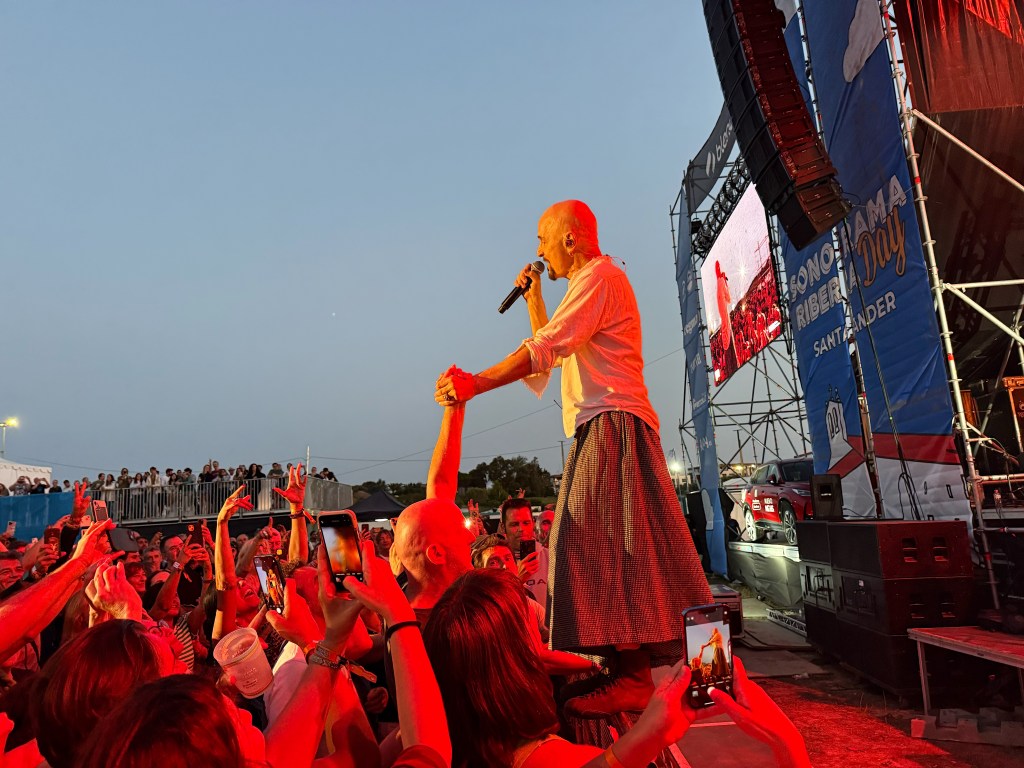
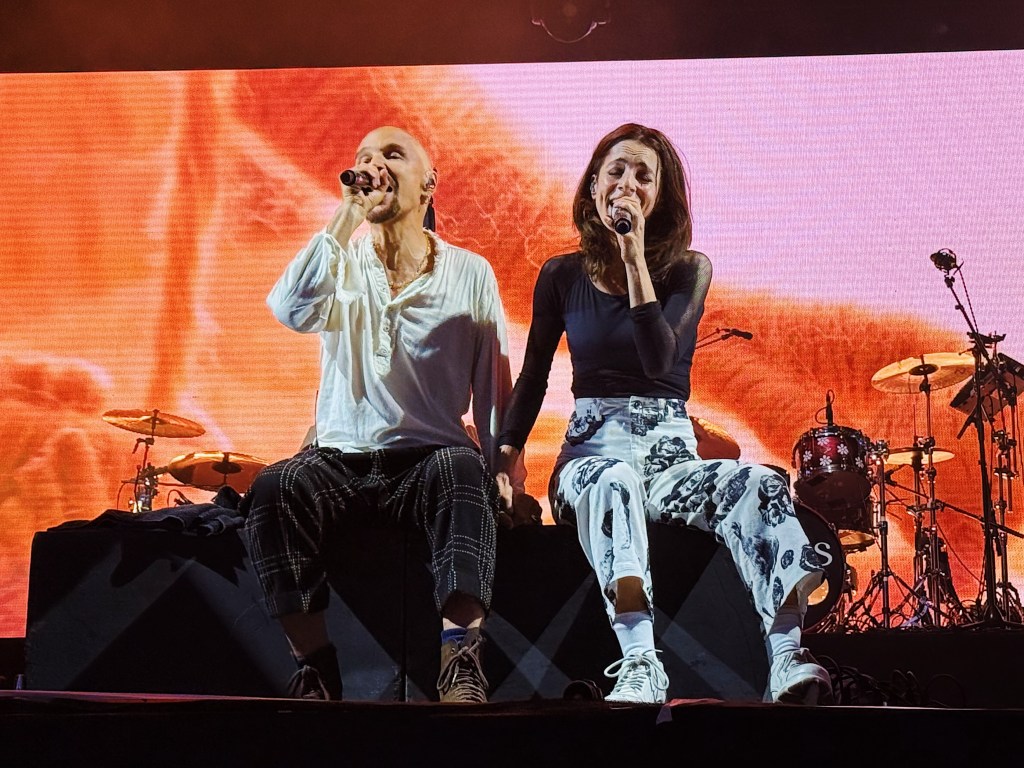
There’s a clear connection between you and Chloe on stage. What’s that like for you? We just love singing to each other. We both get completely lost sometimes. Occasionally we even fuck up the song, because everything just disappears. And that’s been there right from the beginning. We’d be playing to, you know, 20,000 people, and me and Chloe would be completely lost in it.
Do you worry people might misread it? Sometimes I think, “God, I bet people think this is fake,” or that we’re lovers, or that there’s all this projection onto what we’re doing. But it’s very simple. I mean, we do love each other – of course we do – but none of that in that way. We just enjoy the connection so much on stage.
I think that comes across. I’ve never seen it in any other band. I do sometimes think – especially in those moments when we take each other’s hands – that some people probably think it’s staged. But it’s not. We never plan it. It’s very much about the mood. We tend to do it when the intensity gets too much, or when one of us needs that connection. It’s that feeling of, “holy fuck, I just need some contact right now.” It’s so wild.
It’s a powerful connection, and so sweet as well. Her backing vocals on Yummy are amazing, especially the end of ‘Better With You’. Oh, they certainly answered, didn’t they? Jim suggested giving that bit to Chloe. And it worked really well. You can see now that she – and Debbie – are going to have more and more input, which is great. We were worried people might think we’d just brought these young women in to make us look good, but it wasn’t like that. We needed another drummer after Living In Extraordinary Times, because no one drummer could play that part.
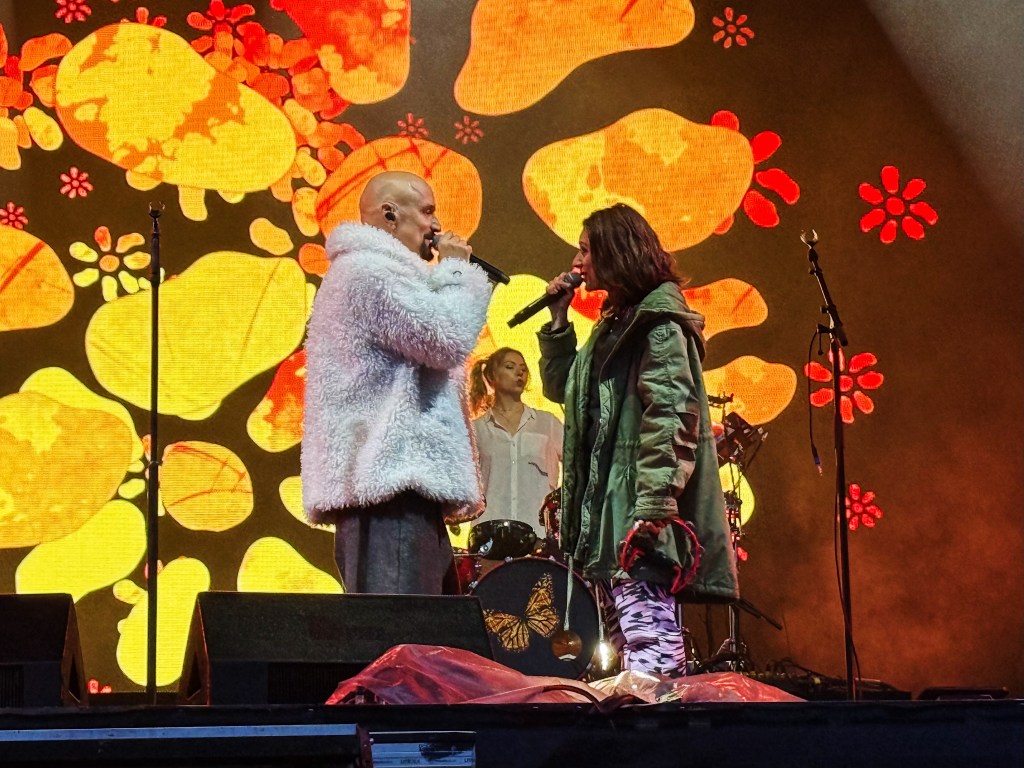
Debbie’s been a strong addition to the band – how did she come on board? I auditioned her on Skype. It was Wednesday and I said to her: the band are rehearsing Friday, I’m coming Saturday, the tour starts on Monday. Go and rehearse with them. Pack your bags, make sure you’ve got your stuff with you and if it works with them, you’re coming on tour on Monday. I turned up and just thought, “oh fuck – she’s meant to be in this band.”
She brought Chloe in, didn’t she? Debbie brought Chloe on tour and we all loved her immediately. Later, Debbie got offered the Netflix gig [with Nasty Cherry] but she’d have to go away for 6 months to a year, so she asked if we’d take Chloe instead – it was a novel way of taking a year off, but we tried it and it worked.
Has it made a big difference to you guys having two women in the band? One had one effect, but two is different – it balances us.
They’ve added so much to the band, onstage and off. All the Colours of You was mostly me and Jackknife [Lee] because we were in lockdown, so everyone phoned in their parts, which meant they didn’t have as much impact on it. But on Yummy, it was like “now let’s see what you can bring to the party!”
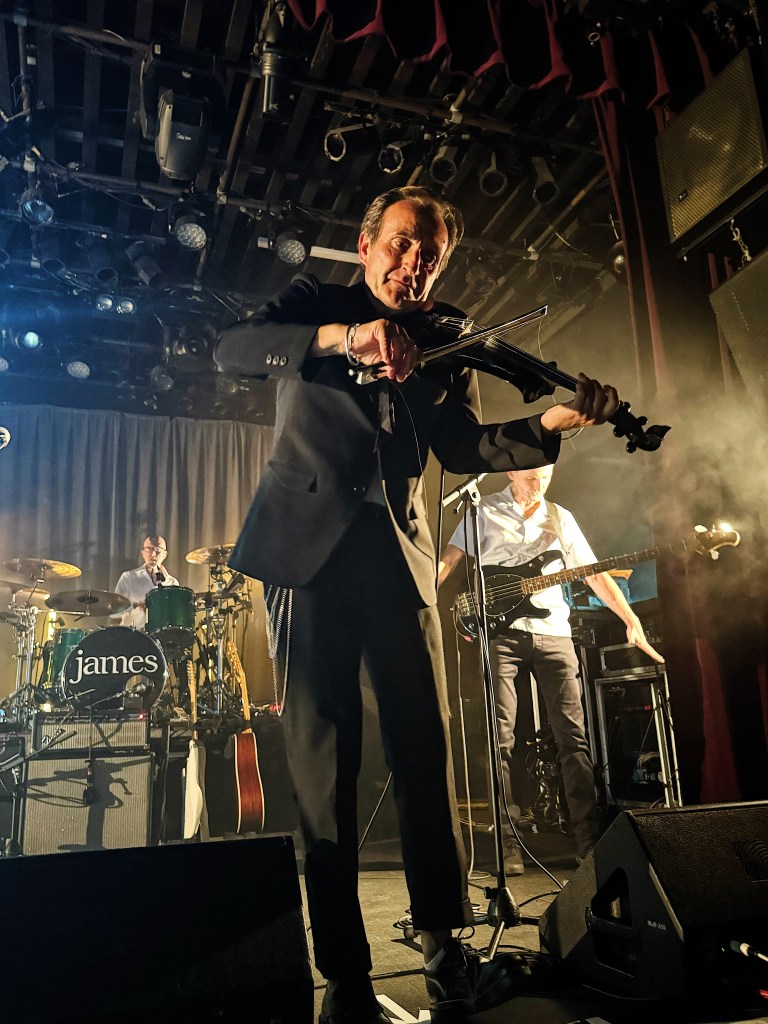
They brought so much to it. Shadow of a Giant is another song made gorgeous by Chloe’s touch. How did you write that one? I like doing the journey songs, so I worked on ‘Shadow of a Giant.’ If I hear a song and think, “oh, this could go on for six or seven minutes,” I get really excited. Saul came up with the halftime, which was great. Then I left loads of space which Saul put violin in. When he plays violin, it’s so good – I tell him that all the time.
I talked to him about it when I interviewed him last, and he said he didn’t want it to be the focal point of the song, or for people to get fed up with it – but people love it. There’s only one other great violinist in a band, and that’s Warren Ellis, so you’re in a very small field of genius. He changes every night on tour – I never know what he’s going to play. It’s thrilling to be in a band with him.

 Shooting Our Mouths Off
Leave a comment